Before anybody called it new jack swing, it was a kid from Harlem playing drum machines like a live instrument. Teddy Riley took the hard knock of hip-hop, put real singing on top of it and changed what Black radio sounded like. This is the producer history behind the sound, the records and the credit fights.
Who Is Teddy Riley? Harlem Roots
Riley grew up in Harlem. Barry Michael Cooper’s 1987 Village Voice cover story places his childhood in the St. Nicholas (“St. Nick”) Projects. It says older neighborhood figures looked out for him at 14 and told him to stay in school.
That story matters because the sound came from the block. The street energy, the dance floor and the studio all lived in the same ecosystem.
Who Coined “New Jack Swing” and What Does It Mean?
Writer Barry Michael Cooper coined the term. It appeared in his 1987 Village Voice profile of Riley, titled “Teddy Riley’s New Jack Swing: Harlem Gangsters Raise a Genius.”
Mixdown explains the name this way: “new jack” meant the new kid on the scene, and “swing” tied Riley’s productions to 1920s gangster-era swing. Nelson George defined the style as taking “the aggression of hip-hop and some of the instrumental sounds, but mixed them with R&B melodies.”
Stereogum notes that Riley, a Harlem native just two years older than Bobby Brown, had “become the face” of the genre by then.
Did Teddy Riley Invent New Jack Swing?
Not alone, and the culture deserves the full picture. Mixdown says crediting Riley with creating the sound entirely overlooks several producers from the early ’80s. Revolt names Babyface, L.A. Reid, Jimmy Jam and Terry Lewis as having explored a similar R&B strain earlier, and cites Janet Jackson’s Control and Babyface’s Tender Lover as precursors.
Our take: Cooper named the genre and Riley became its face and its most complete architect. Both things are true.
What Is the Teddy Riley Sound?
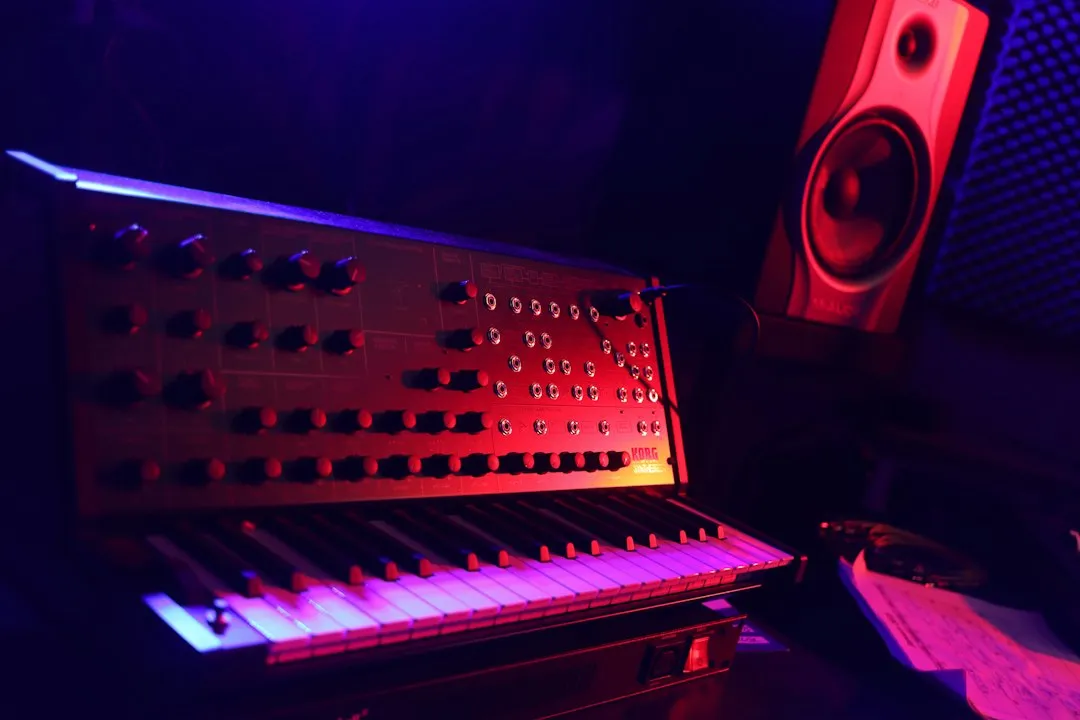
Mixdown describes heavy drum-machine programming, often on an SP-1200 sampler and Roland TR-808, with a dominant snare. It also points to hi-hats programmed in 16th-note triplets, which it calls a Riley trademark, plus extra synthesized percussion.
The technique is just as telling. In a Red Bull Music Academy talk, Riley said he never used a sequencer to program beats. He played drum-machine parts live like any other instrument. His words: “That’s why it took so long for a lot of these records to come out.”
He also performed on his own records. Rolling Stone describes him in that talk as a beatboxer, dancer and impressionist, and notes he sang in groups including Guy and Blackstreet.
Keith Sweat and “I Want Her”
Riley produced Keith Sweat’s “I Want Her” in 1987. Songwriter Universe says it and “My Prerogative” propelled both artists to stardom. On the song, Riley told the RBMA crowd: “I just knew that it would be very interesting to see people dance to it.” Producer thinking built for the floor.
Guy: The Debut That Defined the Era
Guy’s self-titled debut was recorded at Riley’s home studio in Harlem between October 1987 and March 1988. Uptown Records released it in June 1988.
The singles tell the story on the Billboard R&B/Hip-Hop Songs chart:
- “Round and Round” reached #24
- “Groove Me” reached #4
- “Teddy’s Jam” reached #5
- “Spend the Night” reached #15
- “I Like” reached #2, and #70 on the Hot 100
Stereogum says Guy’s “hard digital funk” proved hugely influential.
Teddy Riley’s Hip-Hop Run
Riley was never just an R&B man. Stereogum notes he produced rappers including Doug E. Fresh and Kool Moe Dee. Cooper’s 1987 article says he “had a major hand” in Kool Moe Dee’s “Wild Wild West” and Spoonie Gee’s “Hit Man.” Rolling Stone also credits him with Doug E. Fresh’s “The Show.”
Songwriter Universe lists Heavy D & the Boyz, Doug E. Fresh, Kool Moe Dee, Big Daddy Kane and Wreckx-n-Effect among his hip-hop productions. That range is why he sits right where HoodzRadio lives: between the cipher and the slow jam.
“My Prerogative”: The Credit Story
Bobby Brown’s “My Prerogative” hit #1 on the Hot 100 for a week, dated by Stereogum to January 14, 1989. Stereogum says Riley essentially ghostwrote and ghost-produced it. Gene Griffin was initially credited as producer, with Griffin and Brown as songwriters. Griffin had invested in Riley’s early production career.
That is a producer-history lesson in one record: the sound can be yours while the paperwork says otherwise. Know your splits.
The session itself is legend. Bobby Brown has said it took place at Riley’s mother’s apartment in Harlem: “There was keyboards everywhere, we had the mics set up in the bathroom.”
It wasn’t smooth. Riley told Essence’s Yes Girl! podcast that he and Brown clashed over the vocal register. Brown walked out of the studio for about three hours, and Riley said he considered giving the song to someone else.
In February 1989, Brown headlined Madison Square Garden and closed with “My Prerogative.” LL Cool J, Heavy D and Run joined him, and Riley played a keyboard solo.
Teddy Riley and Michael Jackson: Dangerous
Dangerous (1991) was the first Michael Jackson solo album not produced by Quincy Jones. Riley co-wrote and produced a large portion of it.
In a 2008 Future Music interview, Riley said he got the call around 1991 and that sessions were at Record One and then Larrabee Studios in California. He named Reed and SSL XL consoles as the main boards and said he prefers vintage gear to digital. He was honest about the weight: “It was really difficult for me having to follow in Quincy Jones’ footsteps.” His mission: “For Dangerous, I brought RnB back to Michael in its barest form; RnB and Funk.”
On “Jam,” Jackson brought the idea on DAT, and Riley added instruments and reproduced it. Riley also co-wrote and co-produced “Remember the Time,” the song that gives his memoir its title.
Blackstreet and “No Diggity”
Blackstreet’s “No Diggity” (feat. Dr. Dre and Queen Pen) was the group’s #1 Hot 100 single. It went platinum with the RIAA in 1996 and won the 1998 Grammy for Best R&B Performance by a Duo or Group with Vocals.
From Another Level (Interscope, 1996), it is credited as produced by Teddy Riley and William “Skylz” Stewart, built on a sample of Bill Withers’ 1971 “Grandma’s Hands.” Riley told Vibe in 2012: “I heard Will with that sample working on the MPC in the B room of Future recording studios.” Riley then put the sample into Logic and finished the track.
Our take: “No Diggity” is the bridge between his new jack swing era and the hip-hop soul sound that followed.
Teddy Riley’s Legacy: Why It Still Matters
Riley argues the new jack swing legacy runs through pop. He told Rolling Stone he hears it in Bruno Mars, Drake and Pitbull. That is his opinion, but the drums-under-melody blueprint is hard to miss.
He has worked with Korean and Japanese pop artists and with Boyz II Men, and he is a Songwriters Hall of Fame inductee.
His memoir Remember the Times, written with Jake Brown and published by Simon & Schuster, arrived February 10, 2026. Rolling Stone says it features stories involving Babyface, Bobby Brown, Andre Harrell, Keith Sweat, Kool Moe Dee, Big Daddy Kane, Pharrell Williams, Rodney Jerkins and Barry Michael Cooper. TheGrio frames its purpose as protecting Black music history “on his own terms.”
Sources
- Barry Michael Cooper (Medium)
- Revolt
- Stereogum
- Mixdown
- Rolling Stone
- SoulCulture
- MusicRadar
- American Songwriter
Respect the Legacy. Amplify the Movement. Hear the records that Teddy Riley built, and the voices carrying them forward, on HoodzRadio: listen live now.


Leave A Comment