Three days. On February 7, 2006, Donuts hit the world on J Dilla‘s 32nd birthday. On February 10, he was gone. That timeline alone is enough to stop you cold, but the full story is bigger than the ending. It is the story of a Detroit kid who turned a sampler into a language that rappers, singers and producers are still trying to speak.
This is HoodzRadio’s producer history of J Dilla: who he was, who he worked with, what he played, and why the culture keeps his name on its lips.
Who Was J Dilla?
James Dewitt Yancey was born February 7, 1974 in Detroit and died February 10, 2006 in Los Angeles. He was known first as Jay Dee, then as J Dilla. Same man, same genius, two names that mark different chapters of one career.
Detroit is the root. Everything he made carries that Motor City weight, and the station’s take is simple: you cannot understand the swing without understanding the city.
How Did J Dilla Learn the MPC?
Every producer has a plug who changed the trajectory. For Dilla, one was Detroit musician Amp Fiddler, who taught him to use the MPC. Fiddler also introduced him to Q-Tip of A Tribe Called Quest, and Q-Tip helped get Slum Village’s music heard.
That is how the community works. One musician shows another a machine, one legend opens a door, and suddenly the whole sound of a generation shifts.
What Did Jay Dee Produce in the 1990s?
By 1996, Jay Dee was producing for Busta Rhymes, De La Soul and The Pharcyde. His best-known early credits include:
- The Pharcyde’s “Runnin’”
- De La Soul’s “Stakes Is High”
- Common’s “The Light”
The same year, A Tribe Called Quest dropped Beats, Rhymes and Life (Jive, July 30, 1996). That album introduced The Ummah, the production crew made up of Q-Tip, Ali Shaheed Muhammad and Jay Dee. Think about that lineup. Dilla was standing next to two architects of the golden era, and he belonged there.
J Dilla and the Soulquarians
The Soulquarians were a creative movement where hip-hop and soul blurred into one thing. Members included Jay Dee, D’Angelo, Questlove and James Poyser, with Erykah Badu and Mos Def also part of the circle.
Here is where Dilla’s reach crosses genres. Our take: that circle is a big reason his influence is felt in both hip-hop and R&B, because he sat in rooms where the two worlds were already talking to each other.
Dilla and Common
His production appears on every Common album from Like Water for Chocolate (2000) through Be (2005). Six years of a rapper and a producer growing in lockstep is rare. That is a run, not a moment.
Welcome 2 Detroit and Jaylib
When Dilla stepped out front with Welcome 2 Detroit, he brought the city with him. Karriem Riggins is credited as producer on “The Clapper” (feat. Blu), and Elzhi is featured on “Come Get It.” Detroit talent, on a Detroit record, with the name on the cover.
In 2003, Dilla and Madlib released Champion Sound as Jaylib on Stones Throw, with Peanut Butter Wolf coordinating the collaboration. Two beat minds, one project, and a lot of heads still treat it as required listening.
What Gear Did J Dilla Use?
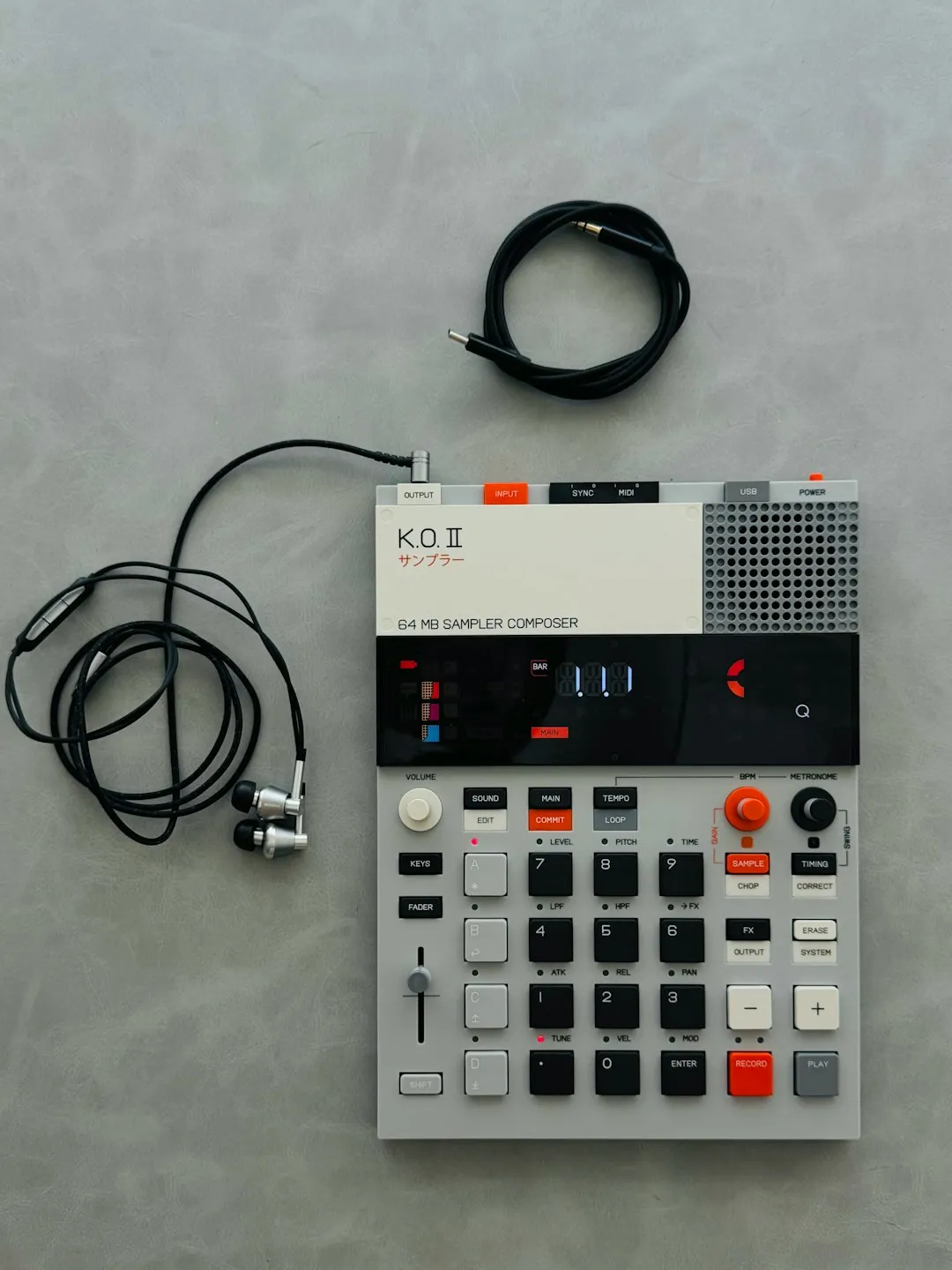
His main machine was the Akai MPC3000 sampler/sequencer, designed by Roger Linn. Earlier in his career he used the E-mu SP-12 and SP-1200 before settling on the MPC3000.
The lesson for young producers is not that you need the same gear. It is that the machine becomes an instrument when you practice it like one. Dilla made the MPC feel human, loose and alive, drums landing just off the grid and somehow exactly right.
How Was Donuts Made?
The popular story says Donuts was made on a turntable and a Boss SP-303 sampler during his hospital stay at Cedars-Sinai in Los Angeles. The fuller story is more complicated: Dan Charnas reports that the project began as a homemade demo tape that Stones Throw finalized, and Stones Throw describes it as “an idea to turn a good demo tape into a full-length album.”
Donuts came out February 7, 2006 on Stones Throw, three days before he passed. Dilla had been battling the blood disease TTP and lupus.
Why J Dilla Still Matters
Rolling Stone ranked Donuts at No. 386 on its 2020 list of the 500 Greatest Albums of All Time. That is the mainstream catching up to what the culture already knew.
Here is our opinion, plainly: Dilla’s legacy is not about plaques. It is about feel. It is in the way a drum lands a little off the grid and somehow lands exactly right. It is in the producers who learned from him, the singers who sat in the same sessions, and the heads who still pull up Donuts when they need to think.
Respect the legacy means learning the names, the credits and the real story. Amplify the movement means passing it on.
Sources
Want more Dilla in your day? Listen live on HoodzRadio and hear the golden era and the next generation on one dial.


Leave A Comment